

Projects and Initiatives
Baboon Monitoring Pilot Project
October 2023 – February 2025
Despite the City investing millions in baboon lethal or non-lethal management, the issue of chacma baboon’s historical presence in Simon’s Town has become a deeply controversial and divisive topic, sparking intense debates and community tensions. The presence of two troops in this area has led to conflicts between community members and wildlife, resulting in several distressing incidents.
Our findings suggest that conventional methods, whether lethal or non-lethal, are fundamentally disruptive, detrimental, and cruel, and often inadequate. In many cases, they appear to worsen the problem unless they are part of comprehensive strategies that include enhancing safety in natural environments, enforcing laws and by-laws, improving waste management, implementing baboon-proofing measures for properties, and providing educational programs to encourage peaceful coexistence.
The physical harm and trauma to individual baboons, the strategic killing of individuals, affecting social structures and dynamics plus the daily war against them and their habitat (development, pollution, fires, other continuous disturbances, etc.) have completely altered the behaviour of these adaptive animals, who are left to barely survive and erratically seek safety, human-derived food, and water, wherever available.
Launch of the Baboon Monitoring and Civil Coexistence Pilot Project
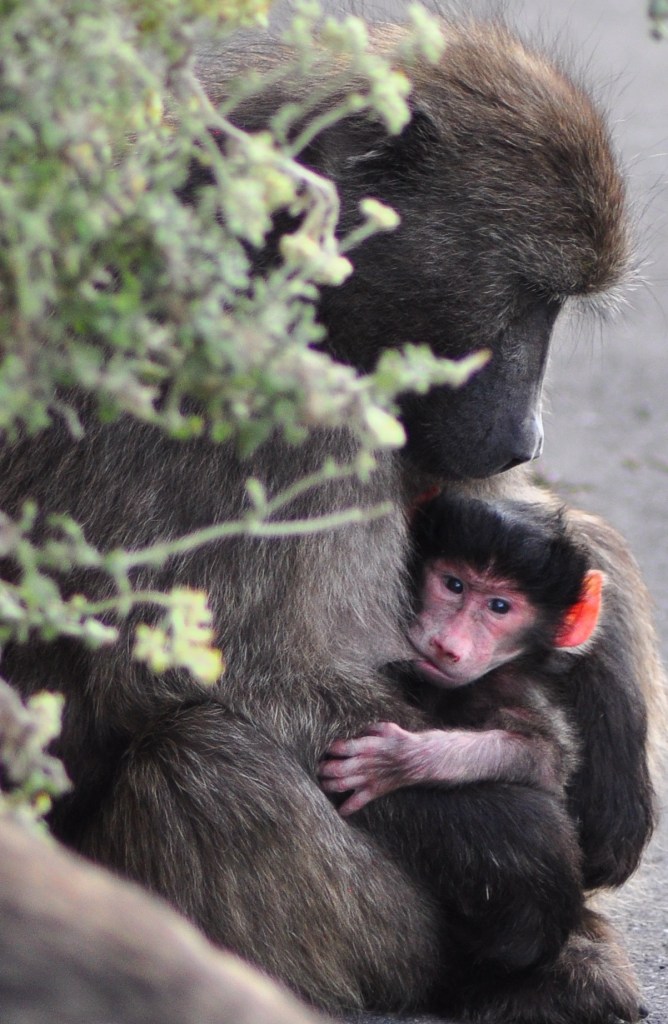
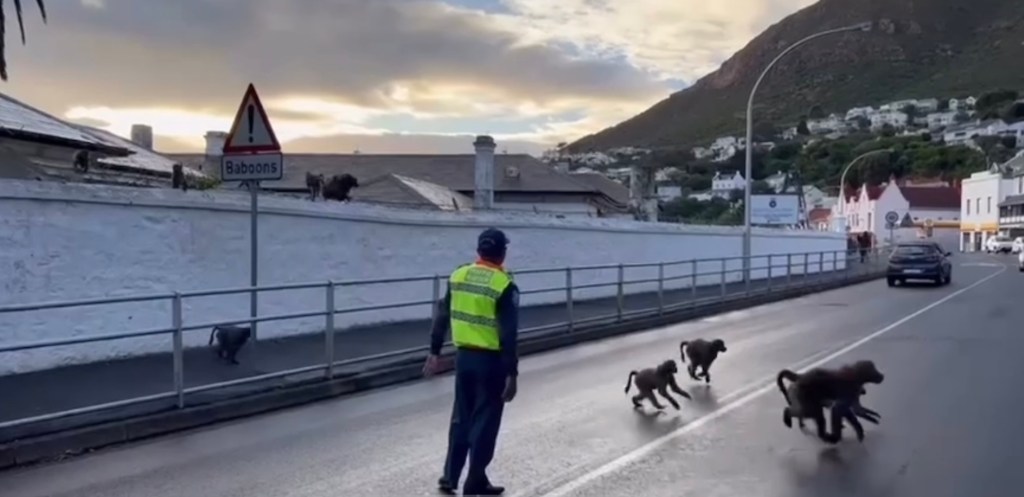
In 2022, a small splinter troop of approximately 12 baboons broke away from the Smitswinkel Baboon Troop, which originally had around 40 members. This Splinter Troop, known as the Simonsberg Troop, sometimes referred to as the Seaforth or Smits Splinter, began venturing into the Seaforth area almost daily, causing challenges for residents and local authorities. Unlike other troops, no official service provider was assigned to manage the Simonsberg Troop. Instead, an official team made several unsuccessful attempts to capture and relocate the Troop or some individuals.
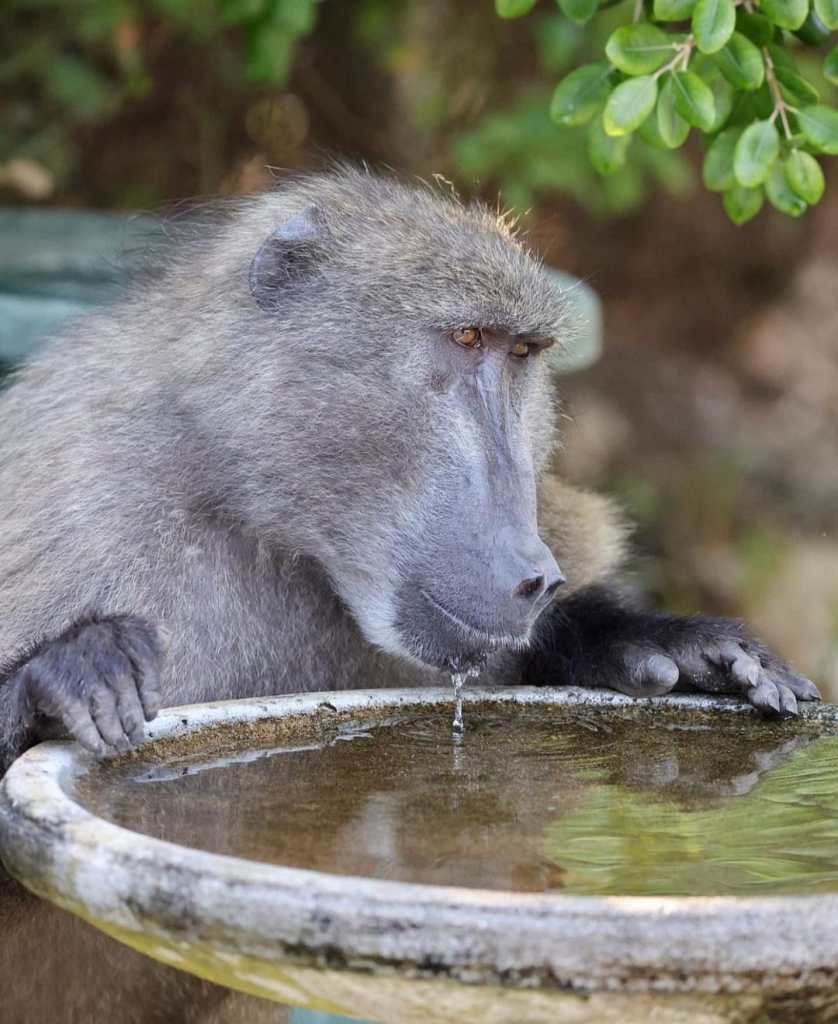
Recognising that splinter troops naturally form in healthy primate populations, GGST initiated a community-funded pilot project aimed at safeguarding the Simonsberg Splinter Troop while also addressing and protecting human interests. Data collected by GGST suggests that, excluding the peak tourist months of December and January, its proactive approach had effectively minimised conflicts with the Simonsberg Troop, thereby ensuring the safety and well-being of both baboons and local residents. During this period, the troop largely remained on the mountain or along the coast, engaging in natural foraging with minimal visits to urban areas.
GGST focused on reducing food attractants and, via the use of monitors, increasing baboon safety in their natural environments. The goal was to implement alternative baboon management strategies that would set a precedent for compassionate conservation and prompt a reassessment of current practices.

In the urban space, this included improving waste disposal practices, wet waste collection through a residential wet waste drop-off system, recycling, and promoting a circular economy. GGST’s initiatives had significantly improved the cleanliness of the environment in the wild and for restaurants, businesses, and residents. The ecosystem also benefitted from the reduction of organic waste in landfills.
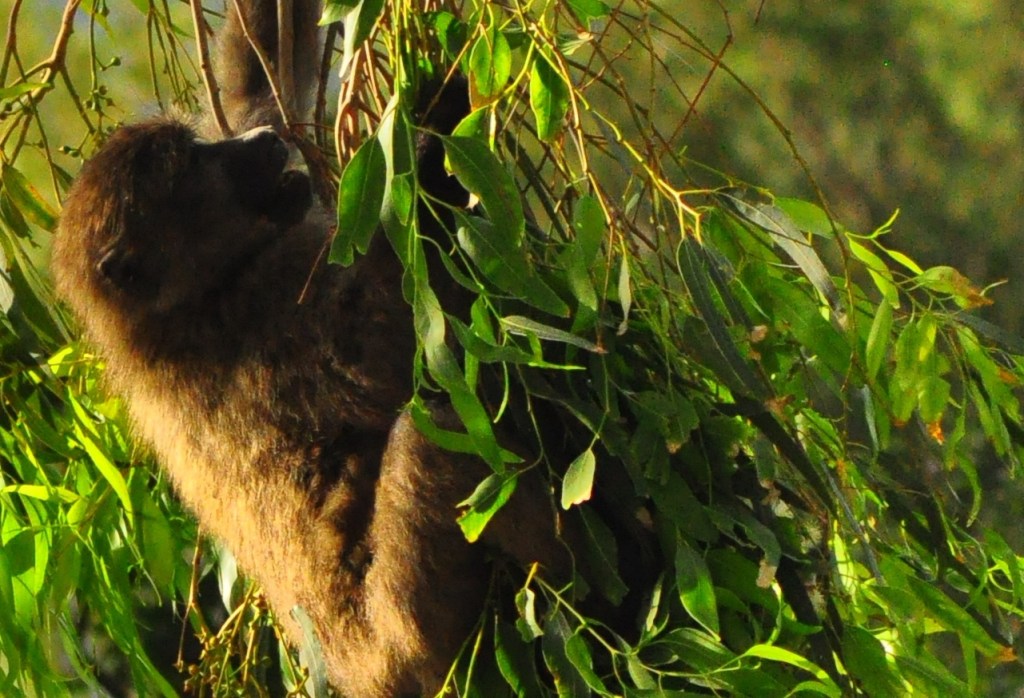
Throughout the duration of the pilot project, the Simonsberg Splinter Troop has shown significant behavioural improvements. The baboons spent most of their time on the mountain, displaying calm and cohesive behaviour. When they entered urban areas, they prefered natural forage over human waste. This positive change was achieved without using aggressive deterrents, relying instead on a holistic approach and constant monitoring, leading the troop to settle in natural spaces with minimal incursions into developed areas.
Most importantly, during the project, the Simonsberg Troop had naturally migrated from a densely urbanised area to a coastal section of the mountain with fewer houses and abundant foraging opportunities. Consequently, the baboons were descending from the mountain less often, rarely seeking human-derived foods, and increasingly relying on natural forage. This positive outcome demonstrated the effectiveness of GGST’s innovative strategy, which challenged traditional practices and promoted a more compassionate and sustainable approach.

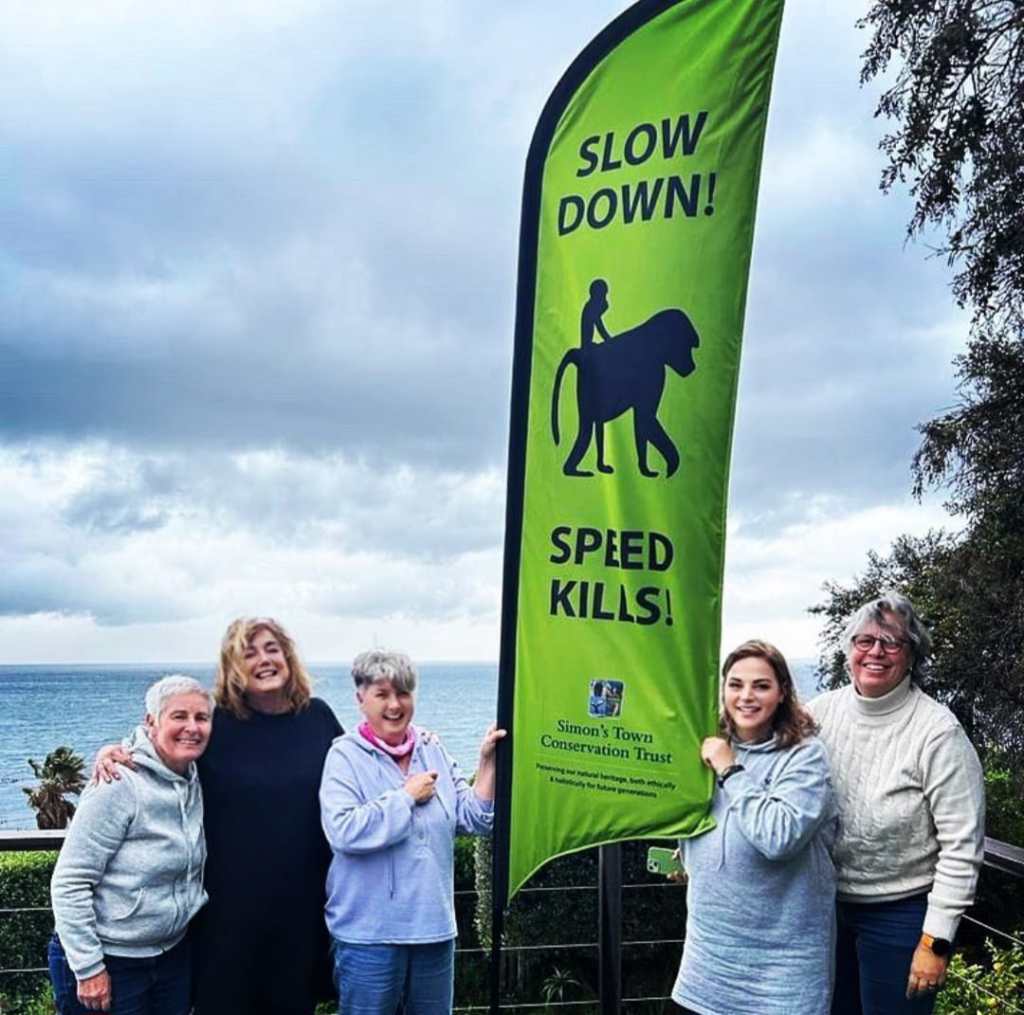





 Green Group Simonstown